
Arlen’s Events Blog
*Click on each Event to enlarge!*

DECONSTRUCTING THE TWILIGHT ZONE #5: “A Stop at Willoughby” webinar via NY Adventure Club 5/13
WEDNESDAY, MAY 13 @ 5:30pm EST:
DECONSTRUCTING THE TWILIGHT ZONE #5: “A Stop at Willoughby” webinar via NY Adventure Club!
The Twilight Zone, the 1959-64 CBS science fiction/fantasy television series, created by one of the most influential American writers of the 20th Century, Rod Serling (1924-75), is considered by generations of TV critics and viewers alike to be one of—if not the—greatest television series of all time.
Serling’s Twilight Zone used the science fiction, fantasy, and horror genres to tell incisive stories that dealt with the social and societal issues of its time. In doing so, Serling and Co. created some of the most indelible half-hours of filmed television drama ever made.
One of those half-hours was The Twilight Zone season one episode “A Stop at Willoughby,” written by Serling, who considered this episode his favorite. Why? Because it was most reflective of Serling’s own lifelong nostalgia for a pre-war, pre-20th Century idyll that in this episode he dubs “Willoughby”: “If I had the means, I think I would like to be in Victorian times. Small town. Bandstands. Summer,” he said in his last interview before he passed away in 1975.
In this taut tale, a mid-thirties ad man can’t take the Madison Avenue rat race any longer; while he finds no solace at home from his ultra-materialist shrew of a wife, he does in the dreams he has of “Willoughby” when he dozes off during his commute in and out of New York City—a commute that Serling himself experienced for three years in the mid-Fifties when he was living an hour away in Westport, Connecticut, and working on the live, 90-minute television productions shot in the City, for which he won three Emmys in a row, giving him the creative clout to go out to Hollywood to launch The Twilight Zone itself.
So join New York Adventure Club and pop culture historian Arlen Schumer (author/designer, Visions from The Twilight Zone and The Five Themes of The Twilight Zone) as he deconstructs “A Stop at Willoughby” via discussion and dissemination of clips from the episode, along with stills, behind-the-scenes material, and collateral images and ideas culled from both the episode’s time, and our time, so that even the most ardent aficionados of The Twilight Zone will feel as if they’ve seen “A Stop at Willoughby” for the first time!
TIX: bit.ly/3QmcXac
CAN’T make it LIVE? Buy a ticket so you can watch a video recording of the webinar for 1 week!
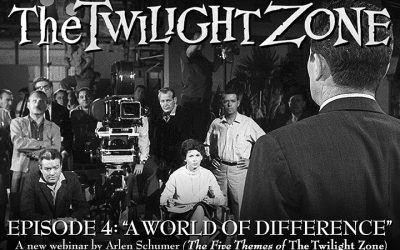
DECONSTRUCTING THE TWILIGHT ZONE #4: “A World of Difference” webinar via NY Adventure Club 4/15
WEDNESDAY, APRIL 15 @ 5:30pm EST:
DECONSTRUCTING THE TWILIGHT ZONE #4: “A World of Difference” webinar via NY Adventure Club!
The Twilight Zone, the 1959-64 CBS science fiction/fantasy television series, created by one of the most influential American writers of the 20th Century, Rod Serling (1924-75), is considered by generations of TV critics and viewers alike to be one of—if not the—greatest television series of all time.
Utilizing the benefits of the varied subject matter and settings afforded by its anthology format, Serling’s Twilight Zone used the science fiction, fantasy, and horror genres to tell incisive stories that dealt with the social and societal issues of its time. In doing so, Serling and Co. created some of the most indelible half-hours of filmed television drama ever made.
One of those half-hours was the Twilight Zone season one episode “A World of Difference,” written by science fiction and fantasy luminary Richard Matheson, one of the triad of main writers of the series that included creator Serling and horror/fantasy author Charles Beaumont. The idea of an actor believing he is the character he’s playing, as played out in “A World of Difference,” is both surreal and Brechtian in its fourth-wall breaking, self-referentially meta mise-en-scene. It’s ur-Twilight Zone, because writer Matheson asks the metaphysical query central to the very concept of the series itself, in Serling’s voiceover intro: “How thin a line separates that which we assume to be real with that manufactured inside of a mind?” And the episode’s existential ending is one of the most difficult Twilight Zone endings to parse, to intellectually untangle—thereby making it, by default, one of the series’ greatest episodes.
So join New York Adventure Club and pop culture historian Arlen Schumer (author/designer, Visions from The Twilight Zone and The Five Themes of The Twilight Zone) as he deconstructs “A World of Difference” via discussion and dissemination of clips from the episode, along with stills, behind-the-scenes material, and collateral images and ideas culled from both the episode’s time, and our time, so that even the most ardent aficionados of The Twilight Zone will feel as if they’ve seen “A World of Difference” for the first time!
TIX: bit.ly/4lwNJ4k
CAN’T make it LIVE? Buy a ticket so you can watch a video recording of the webinar for 1 week!
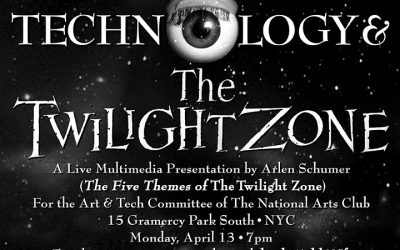
TECHNOLOGY & THE TWILIGHT ZONE live presentation @ Nat’l Arts Club NYC 4/13
MONDAY, APRIL 13 @ 7:00pm EST:
THE NATIONAL ARTS CLUB • 15 Gramercy Park South • NYC
The 156 episodes of the legendary anthology television series The Twilight Zone (CBS, 1959-64), created by the equally-legendary writer Rod Serling, are justifiably famous for their timeless stories of science-fiction, fantasy, and horror, stories whose themes have proven to be as relevant to our societal and cultural concerns here in the 21st Century as they were back in the sixth decade of the 20th.
Of particular concern to head writer Serling and his fellow Twilight Zone scribes was the effects modern technology was having on mankind, effects at once both promising and beneficial, but more often than not, ones of a more deleterious, dehumanizing nature.
In this way, the themes of these taut, terse Twilight Zone episodes by Serling & Company were both of their time—the post-War, post-Atom Bomb boom in science, technology, and space exploration—and timeless, as so many of those episodes are eerily prescient, uncannily predicting our present grapplings with technologies and their potential for both creation and destruction, physically and existentially.
Arlen Schumer, author/designer of two books on the Serling series, the coffee table Visions from The Twilight Zone, and his new book of essays on the series’ greatest episodes, The Five Themes of The Twilight Zone, has put together a multimedia presentation that highlights over a dozen episodes that delve deeply into the concept of “Technology…and The Twilight Zone.”
And it’s FREE, but REGISTER, seating is limited: bit.ly/4sld3Nf

SPRINGSTEEN LIVE retrospective webinar via NY Adventure Club 3/31
TUESDAY, MARCH 31 @ 5:30pm EST:
BRUCE SPRINGSTEEN LIVE Retrospective webinar via NY Adventure Club!
Though Bruce Springsteen has long been acknowledged as one of (if not the) greatest live performers in rock & roll history, film and videos of his greatest live performances are not as well known or widely seen, especially his earliest ones, because he came to prominence in the pre-video 1970s.
But now Springsteen historian Arlen Schumer (art director of the first Springsteen fan publication, Thunder Road, and longtime contributor to its successor, Backstreets; see his Bruce-works at: arlenschumer.com/springsteen/) has curated a collection of what he considers Bruce’s best performance films and videos from throughout his long and storied career.
Interspersed with still images that give historical background to each performance, along with his usual insightful pop culture commentary, Schumer’s webinar will make you see and hear Bruce Springsteen’s music and career as if for the first time!
TIX: bit.ly/4l77iQT
Can’t make it LIVE? Buy a ticket so you can watch a replay of the webinar video for 1 week!
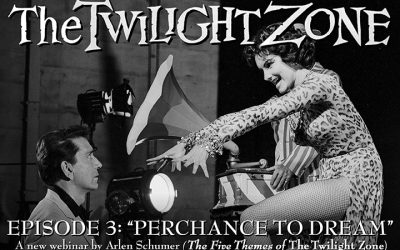
DECONSTRUCTING THE TWILIGHT ZONE #3: “Perchance to Dream” webinar via NY Adventure Club 3/17
TUESDAY, MARCH 17 @ 5:30pm EST:
“DECONSTRUCTING THE TWILIGHT ZONE: ‘Perchance to Dream’” webinar via NY Adventure Club!
The Twilight Zone, the 1959-64 CBS science fiction/fantasy television series, created by one of the most influential American writers of the 20th Century, Rod Serling (1924-75), is considered by generations of TV critics and viewers alike to be one of—if not the—greatest television series of all time.
Utilizing the benefits of the varied subject matter and settings afforded by its anthology format, Serling’s Twilight Zone used the science fiction, fantasy, and horror genres to tell incisive stories that dealt with the social and societal issues of its time, which have proven to be still relevant to us today in the 21st Century. As well, the series tackled all the timeless themes and conflicts that man has forever been telling stories about, but presented them in the relatively new medium of black and white filmed television. In doing so, Serling and Co. created some of the most indelible half-hours of filmed television drama ever made.
One of those half-hours was The Twilight Zone’s ninth episode, “Perchance to Dream,” the first series episode written by the enigmatic horror and fantasy author Charles Beaumont, one of the triad of main writers of the series that included creator Serling and science fiction luminary Richard Matheson. “Perchance” is the first of Beaumont’s two Twilight Zone meditations on the nature of dreams and reality (the other is season two’s “Shadow Play,” a future “Deconstructing” episode), a core concept of The Twilight Zone itself. It takes us on a surreal rollercoaster ride—literally—that plunges us into the feverish depths of one man’s never-ending nightmares. The episode’s surprise ending is still one of the most shocking of all Twilight Zone twists…and one of the most misunderstood! Why? You’ll have to come to the webinar to find out!
So join New York Adventure Club and pop culture historian Arlen Schumer (author/designer, Visions from The Twilight Zone and The Five Themes of The Twilight Zone) as he deconstructs “Perchance to Dream” via discussion and dissemination of clips from the episode, along with stills, behind-the-scenes material, and collateral images and ideas culled from both the episode’s time, and our time, so that even the most ardent aficionados of The Twilight Zone will feel as if they’ve seen “Perchance to Dream” for the first time!
TIX: bit.ly/4rMu5mS
CAN’T make it LIVE? Buy a ticket so you can watch a video recording of the webinar for 1 week!
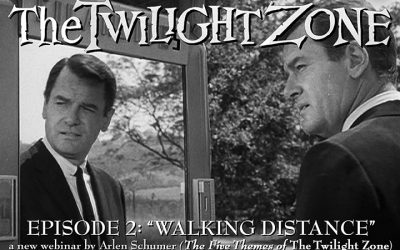
DECONSTRUCTING THE TWILIGHT ZONE #2: “WALKING DISTANCE” webinar via NY Adventure Club 2/18
WEDNESDAY, FEBRUARY 18 @ 5:30pm EST:
DECONSTRUCTING THE TWILIGHT ZONE #2: “Walking Distance” webinar via NY Adventure Club!
The Twilight Zone, the 1959-64 CBS science fiction/fantasy television series, created by writer and showrunner Rod Serling (1924-75), is considered by generations of TV critics and viewers alike to be one of—if not the—greatest television series in history (usually ranking in the top three with The Sopranos and Seinfeld).
Utilizing the benefits of the varied subject matter and settings afforded by its anthology format, Serling’s Twilight Zone used the science fiction, fantasy, and horror genres to tell incisive stories that dealt with the social and societal issues of its time, which have proven to be still relevant to us today in the 21st Century. As well, the series tackled all the timeless themes and conflicts that man has forever been telling stories about, but presented them in the relatively new medium of black and white filmed television. In doing so, Serling and Co. created some of the most indelible half-hours of television drama ever broadcast.
One of those half-hours was The Twilight Zone’s very first episode, written and narrated by Serling, that aired on October 2, 1959, “Where is Everybody?” in which an amnesiac 30-year-old man in an air force jumpsuit wanders through a completely deserted American town where things are not quite what they seem. A true pilot episode in that it included virtually all the existential and surreal motifs that would become associated with The Twilight Zone—isolation, fear, hallucinogenic delusions that seem all too real—“Where is Everybody?” is finally a harrowing visualization of one man’s alienation from reality, indeed from one’s self, which would prove to be the defining, existential crisis facing man in the second half of the 20th Century, a time when the pit of man’s fears and the summit of his knowledge—the atomic bomb—first coexisted.
So join New York Adventure Club and pop culture historian Arlen Schumer (author/designer, Visions from The Twilight Zone andThe Five Themes of The Twilight Zone) as he deconstructs “Walking Distance” via discussion and dissemination of clips from the episode, along with stills, behind-the-scenes material, and collateral images and ideas culled from both the episode’s time, and our time, so that even the most ardent aficionados of The Twilight Zone will feel as if they’ve seen “Walking Distance” for the first time!
TIX: bit.ly/3LRjqIm
CAN’T make it LIVE? Buy a ticket so you can watch a video recording of the webinar for 1 week!

60th ANNIVERSARY of the TV BATMAN webinar via NY Adventure Club 1/12/26
MONDAY, JANUARY 12 @ 8:00pm EST:
“THE 60th ANNIVERSARY of the BATMAN TV Series” webinar via NY Adventure Club!
Do you remember the frisson of excitement the night of Wednesday, January 12, 1966— truly, “a day that will live (in infamy?) forever!”—when the Batman television series debuted?
If not, don’t worry—because pop culture historian Arlen Schumer (author/designer, The Silver Age of Comic Book Art and The Five Themes of The Twilight Zone), was there, and so, on the 60th Anniversary of Batman’s premiere, he’s presenting a new webinar that not only recreates the pop culture atmosphere of the mid-‘60s—the dawn of psychedelia—that spawned the landmark series, but details the comic book origins of the show, and how they were—and weren’t—translated to television.
Of course, the ‘66 merchandising and cultural phenomenon known as “Batmania” is covered, too!
So join New York Adventure Club and Schumer as he weaves together a plethora of Batman TV series clips, interspersed with stills, behind-the-scenes production art, and advertising and promotional material that will make even the most diehard Batmaniac look at the show as if for the first time!
TIX: bit.ly/44JgyU9
CAN’T make it LIVE? Buy a ticket so you can watch a video recording of the webinar for 1 week!

“ANIMATING CHRISTMAS” webinar via NY Adventure Club 12/23
TUESDAY, DECEMBER 23 @ 5:30pm EST:
“ANIMATING CHRISTMAS: 1962-1982” webinar via NY Adventure Club!
During a twenty-year period that began with Mr. Magoo’s Christmas Carol in 1962 and ended with The Snowman in 1982, ten animated Christmas specials appeared on television—not in the movies or on Broadway—that redefined the spirit of the Christmas season for new generations, with new visual versions of legendary Christmas stories that have become iconic classics today:
MAGOO’S CHRISTMAS CAROL (1962); RUDOLPH THE RED-NOSED REINDEER (’64); THE FLINTSTONES Christmas episode (’64); A CHARLIE BROWN CHRISTMAS (’65); THE GRINCH WHO STOLE CHRISTMAS (’66); THE LITTLE DRUMMER BOY (’68); FROSTY THE SNOWMAN (’69); SANTA CLAUS IS COMIN’ TO TOWN (’70); A CHRISTMAS CAROL (’71); and THE SNOWMAN (’82).
Hosted by pop culture historian Arlen Schumer (author/designer, The Silver Age of Comic Book Art and The Five Themes of The Twilight Zone), these timeless cartoon classics are discussed and disseminated via film clips, cels and stills from the shows, storyboards and behind-the-scenes production art, and images from the broader popular culture that place these animated Christmas specials in their time, while illuminating their relevance for all time!
TIX: bit.ly/3Mm0RvC
CAN’T make it LIVE? Buy a ticket so you can watch a video recording of the webinar for 1 week!

“A CHARLIE BROWN CHRISTMAS” webinar via NY Adventure Club 12/9
TUESDAY, DECEMBER 9 @ 5:30pm EST:
“THE 60th ANNIVERSARY of ‘A CHARLIE BROWN CHRISTMAS'” webinar via NY Adventure Club!
December 9, 2025 is the 60th Anniversary of the original broadcast of what most everyone considers the greatest animated Christmas television special of all time, “A Charlie Brown Christmas,” based on the immortal comic strip “Peanuts,” created by one of the greatest cartoonists of the 20th Century, Charles Schulz (1922-2000).
What makes this Christmas cartoon so special is the fact that not only did Schulz himself write it—based on his own Christmas-themed strips—but that he and his fellow creators of the film, producer Lee Mendelson and director Bill Melendez, maintained the creative control necessary to ensure that Schulz’s unique vision of a Yuletide story that kept the Christ in Christmas would not be censored, against tremendous network and advertising pressure.
Hosted by pop culture historian Arlen Schumer (author/designer, The Silver Age of Comic Book Art and The Five Themes of The Twilight Zone), this timeless cartoon classic is discussed and disseminated via clips and stills from the show, behind-the-scenes production art, storyboards, animation cels, photographs, and images from the broader popular culture that places “A Charlie Brown Christmas” in its time, while illuminating its relevance for all time.
TIX: tinyurl.com/4etjs5jp
CAN’T make it LIVE? Buy a ticket so you can watch a video recording of the webinar for 1 week!

65th ANNIVERSARY of EYE of the BEHOLDER webinar via NY Adventure Club 11/11
TUESDAY, NOVEMBER 11th @ 5:30pm EST:
“The 65th ANNIVERSARY OF THE GREATEST ‘TWILIGHT ZONE’ EPISODE” webinar!
November 11, 2025 is the 65th Anniversary of the original broadcast of what many consider the greatest episode of the legendary television series The Twilight Zone, “Eye of the Beholder,” written by series creator and head writer, Rod Serling (1924-75).
The script is a hallmark of Serling’s style: strong on theme, poetic dialogue, morality, and suspense, as he takes the age-old adage about beauty and gives it a thorough Twilight Zone treatment, capped by a truly unforgettable ending that burns into your brain forever. The deft direction, stunning lighting, camerawork, and makeup are artistically audacious and utterly memorable.
Hosted by Twilight Zone historian Arlen Schumer (author/designer, Visions from The Twilight Zone and The Five Themes of The Twilight Zone), his multimedia webinar will discuss and disseminate “Eye of the Beholder” via clips, still images from the episode, from the series, and from the broader pop culture, then and. now, itself influenced by the tremendous, lasting impact of this single, and singular Twilight Zone episode!
TIX: tinyurl.com/5c7kwys4
*CAN’T make it LIVE? Buy a ticket so you can watch the video recording for 1 week!